24 July 2026
How to Build an Indoor Cycling Class That Keeps Riders Coming Back
A step-by-step guide to building an indoor cycling class: set your intention, structure the effort arc, match music to effort, and coach with intent.
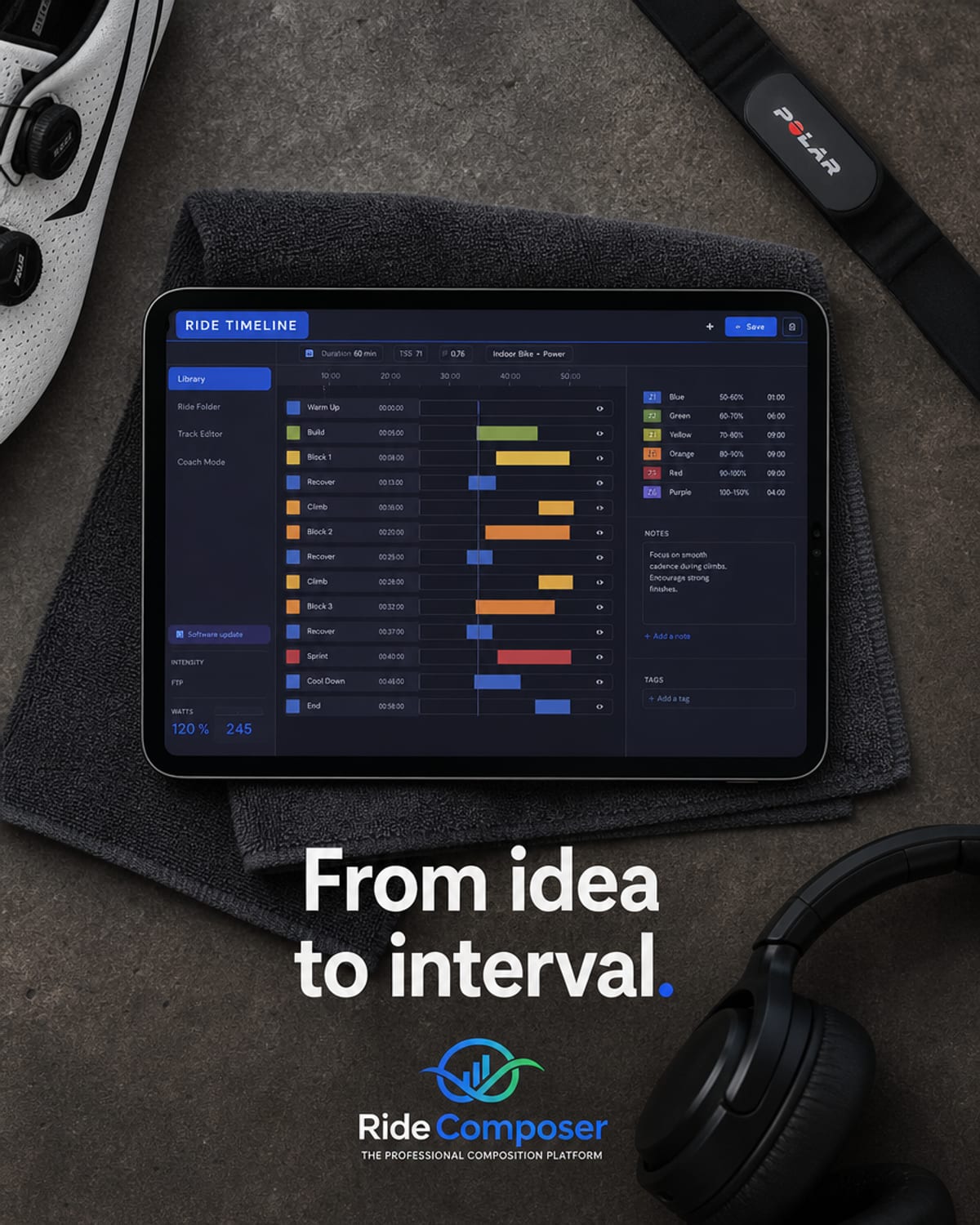
Whether you're teaching your first class or your five-hundredth, a great indoor cycling ride is never an accident. It's designed. Here's a simple, repeatable way to build a class that feels intentional from the first pedal stroke to the final stretch.
Start with one intention
Before you pick a single track, answer one question: what is this class for? Endurance? A hard interval day? A hill climb? A feel-good recovery ride? One clear intention gives every later decision — music, effort, cues — something to serve. A class that tries to be everything ends up being nothing.
Structure the effort arc
Almost every effective ride follows the same shape: a rise, a peak, and a return. A simple 50-minute template:
- Warm-up (6–8 min) — easy cadence, rising gradually. Get everyone breathing and connected.
- Build (10–12 min) — introduce resistance and intent. First climbs or steady tempo work.
- Main set (15–18 min) — the heart of the class: intervals, climbs or sprints that deliver your intention.
- Peak (3–5 min) — the physical and emotional high point. Save your biggest track for here.
- Recovery & stretch (5–7 min) — bring heart rates down, finish calm and satisfied.
Adjust the minutes to your class length, but keep the arc. Riders feel a well-shaped arc even when they can't name it.
Match your music to the effort — not the other way around
The classic mistake is to pick songs you love, then force effort onto them. Flip it. Decide the effort for each block first, then choose tracks whose tempo (BPM) and energy fit that effort. A 60–70 BPM track suits a heavy seated climb; 130–140 BPM drives fast flat riding. When a song is almost right, being able to nudge its tempo is what makes it land.
Write your cues before class
Great coaching isn't improvised on the fly — it's prepared, then delivered naturally. For each block, note the effort target, the cadence, and one or two coaching lines. Knowing what you'll say frees you to actually read the room instead of scrambling for words.
Rehearse your transitions
The moments between tracks are where classes fall apart — an awkward gap, a jarring tempo jump, a scramble at the laptop. Plan how each block flows into the next: matched tempo, a deliberate drop, a spoken bridge. Smooth transitions are invisible; rough ones are all your riders remember.
Let the software carry the load
You can do all of this by hand — but a tool built for the job saves hours and removes the on-the-bike scramble. This is exactly what RideComposer does: build your effort arc, set and adjust each track's tempo (pitch preserved), loop the best sections, and keep your cues in front of you hands-free in Coach Mode — so you can teach instead of managing a playlist.
Your first ride
Start simple: one intention, the arc above, music that matches effort, and your cues written down. Teach it, feel what worked, refine it. Do that a few times and building great classes becomes second nature.